Change of facility function, new loads, corrosion. Each of these factors can reduce the safety and availability of a building. More and more companies are looking for solutions that increase load capacity and shorten downtime.
In this material we show how we conduct the audit, design and execution of strengthening works. You will learn about the methods, technical requirements, cost factors and the process of acceptance and inspection after the works.
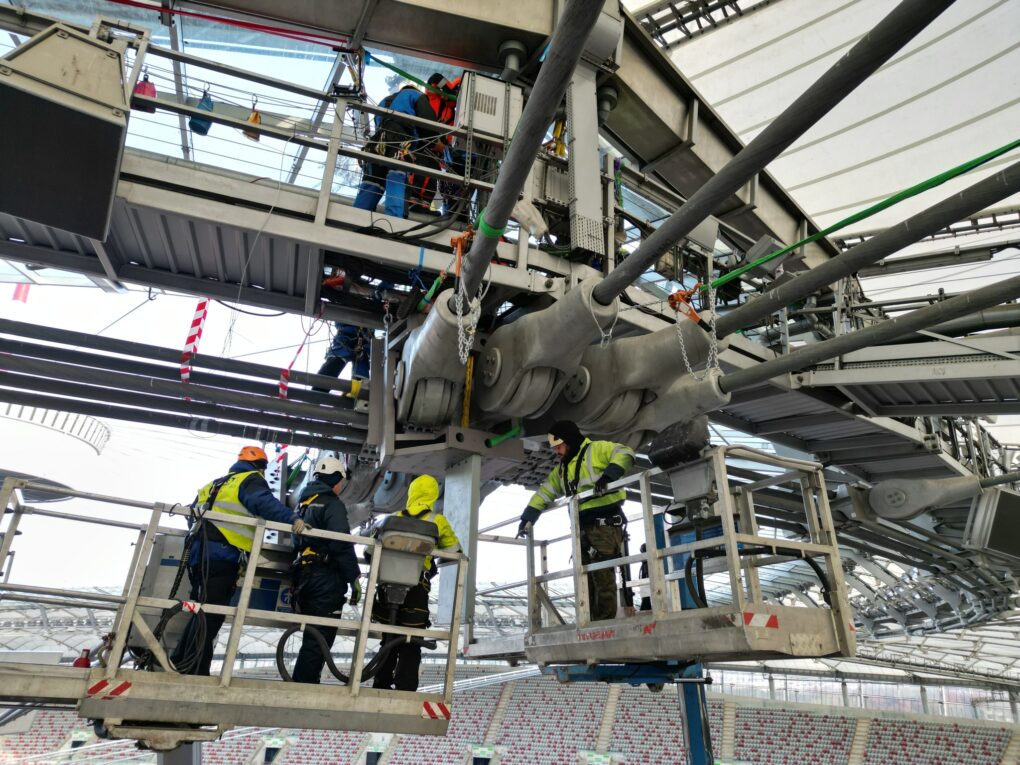
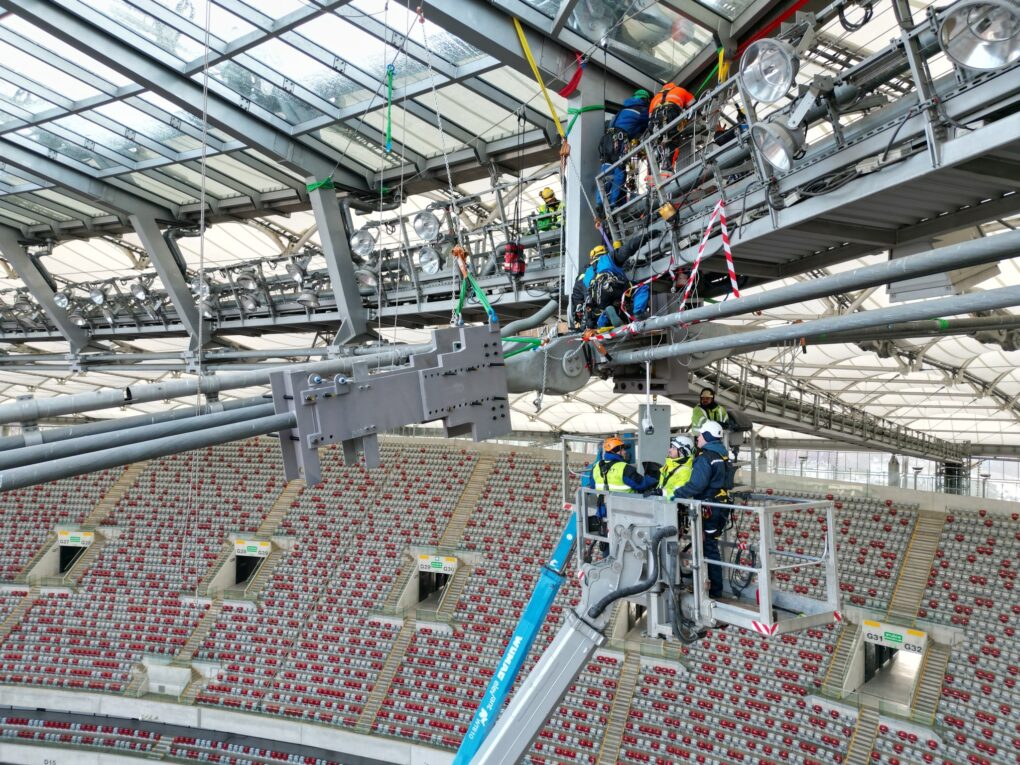
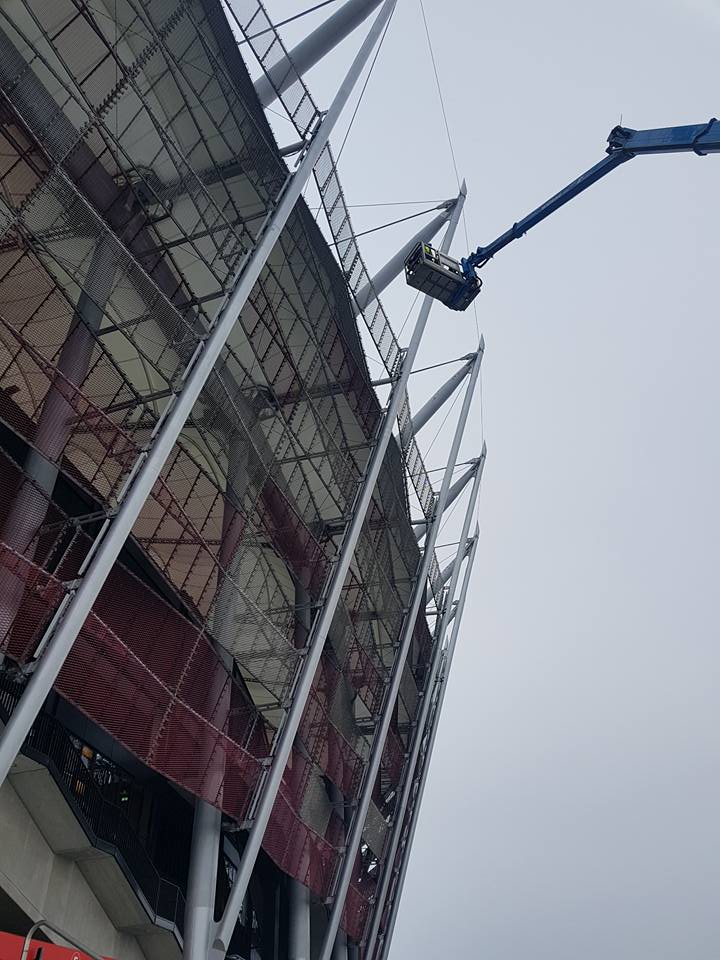
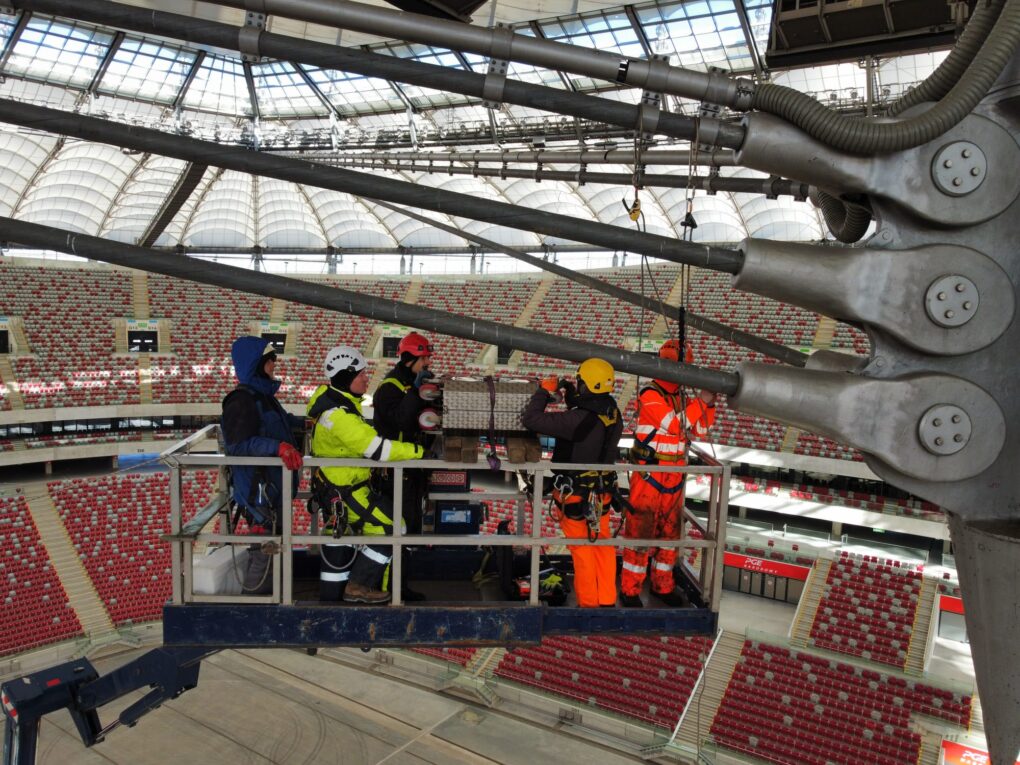
Scope of work: audit, design, and strengthening execution
We carry out comprehensive strengthening of steel structures in operating industrial, commercial, and warehouse facilities. We combine design work, NDT testing, and execution in planned or emergency mode across Poland and the European Union.
- Expert assessments and inspections of load-bearing steel elements, including NDT testing and corrosion evaluation
- Structural calculations and strengthening designs, workshop and technological drawings
- Access organization and work at height using equipment with valid certifications
- Execution of strengthening and repairs, anti-corrosion protection, adjustment of connections
- Post-work control testing and as-built documentation
- Additionally: MRT magnetic testing of steel ropes, installation of safety nets, maintenance works
Strengthening methods and their effect on load capacity and stiffness
The choice of method depends on the condition of the elements, the type of connections, and the facility’s operating conditions. Each solution is evaluated in terms of load capacity, stiffness, and impact on facility operation.
- Increasing cross-sections and local steel reinforcement plates. Improves load capacity and stiffness and can often be performed while the facility remains in operation
- Reinforcement of bolted and welded connections. Increases node safety and reduces susceptibility to vibration
- Modification of the structural scheme, e.g., adding supports, bracing, or tie rods. Reduces deflections and redistributes loads
- Application of composite materials on steel, e.g., CFRP tapes. Adds load capacity with minimal interference in geometry
- Anti-corrosion repairs and replacement of weakened fragments. Stabilizes element condition and extends service life
How inspection and testing are carried out before strengthening
We begin with the analysis of documentation and a site visit. We assess geometry, deflections, connection condition, and environmental impact. If necessary, loads are temporarily limited and safe access is organized. Testing is carried out without shutting down entire zones whenever conditions allow.
Stages of inspection and non-destructive testing
- Visual inspection of elements and connections and mapping of damage
- Ultrasonic testing of welds and thick-walled elements
- Magnetic particle testing of welds and heat-affected zones
- Penetrant testing of welds and small surface cracks
- Wall thickness measurements and corrosion loss assessment
- MRT magnetic testing of steel ropes with a discontinuity report
- Measurement of deflections and displacements and comparison with calculations
- Report with conclusions and recommended strengthening method
Technical requirements and material availability for strengthening works
Before starting work, we confirm the availability of steel, connectors, coatings, and any required composites. Material grades are selected according to operating conditions and the required durability. We agree on the color scheme and anti-corrosion protection technology to maintain compatibility with existing coatings. If logistical limitations occur, prefabrication and phased deliveries are planned.
Access conditions and required qualifications
- Access to work zones, closure plans, and the facility’s HSE guidelines
- Work at height performed by personnel with industrial rope-access qualifications
- Operators of aerial platforms and cranes with valid certifications
- Welders and installers with confirmed qualifications for the specified technologies
- NDT personnel with documented qualifications for the applied methods
- Measuring equipment and protective equipment with valid certifications
Costs and cost-effectiveness of strengthening solutions
Strengthening is often more beneficial than replacing elements or shutting down a facility. We analyze variants in terms of total cost, time, and impact on production. We look for solutions that shorten downtime and reduce heavy work in operating facilities.
Factors affecting pricing and cost-effectiveness
- Extent of damage and degree of corrosion
- Strengthening method and required materials
- Access to the work area and logistical difficulties
- Scope of testing, calculations, and design documentation
- Schedule, night work, or phased execution
- Required acceptance procedures, load tests, and post-completion inspections
- Required corrosion resistance level and coating durability
Quality assurance, safety, and post-work control testing
Work is carried out according to the agreed technology and inspection plan. Each stage is confirmed with a protocol. After installation, control tests are performed on selected welds and connections, and deflection measurements are taken if required by the calculations. Areas of coating interference are protected. Finally, we deliver a completion report with test results and operational recommendations.
Selected projects and references from rope-access and NDT works
We have experience in inspections and repairs of steel structures in halls, buildings, and hangars. We have carried out MRT magnetic rope testing in cooperation with a specialized laboratory. We have performed rope-access work, installation of safety nets, and tasks in large public and industrial facilities. We have cooperated with well-known business partners in Poland and other European Union countries.
Schedule a consultation and request a quote
We initially analyze your needs and the facility’s accessibility. We propose methods, a schedule, and actions to reduce downtime. We prepare a testing plan, a strengthening concept, and an indicative scope of work for quotation.
A well-planned strengthening increases safety and extends the service life of a facility. A thoughtful method, reliable testing, and efficient execution reduce risks and long-term costs. It is a decision that supports business continuity and allows better use of existing infrastructure.
Schedule a consultation and receive an individual quote for strengthening works.

